
ॐ ❖ ॐ

🏛️
✦
Kataragama
Sri Lanka's Sacred Heart
Sacred Journey0%
✦ Sacred Destination of Sri Lanka ✦
Sri Lanka's Sacred Heart
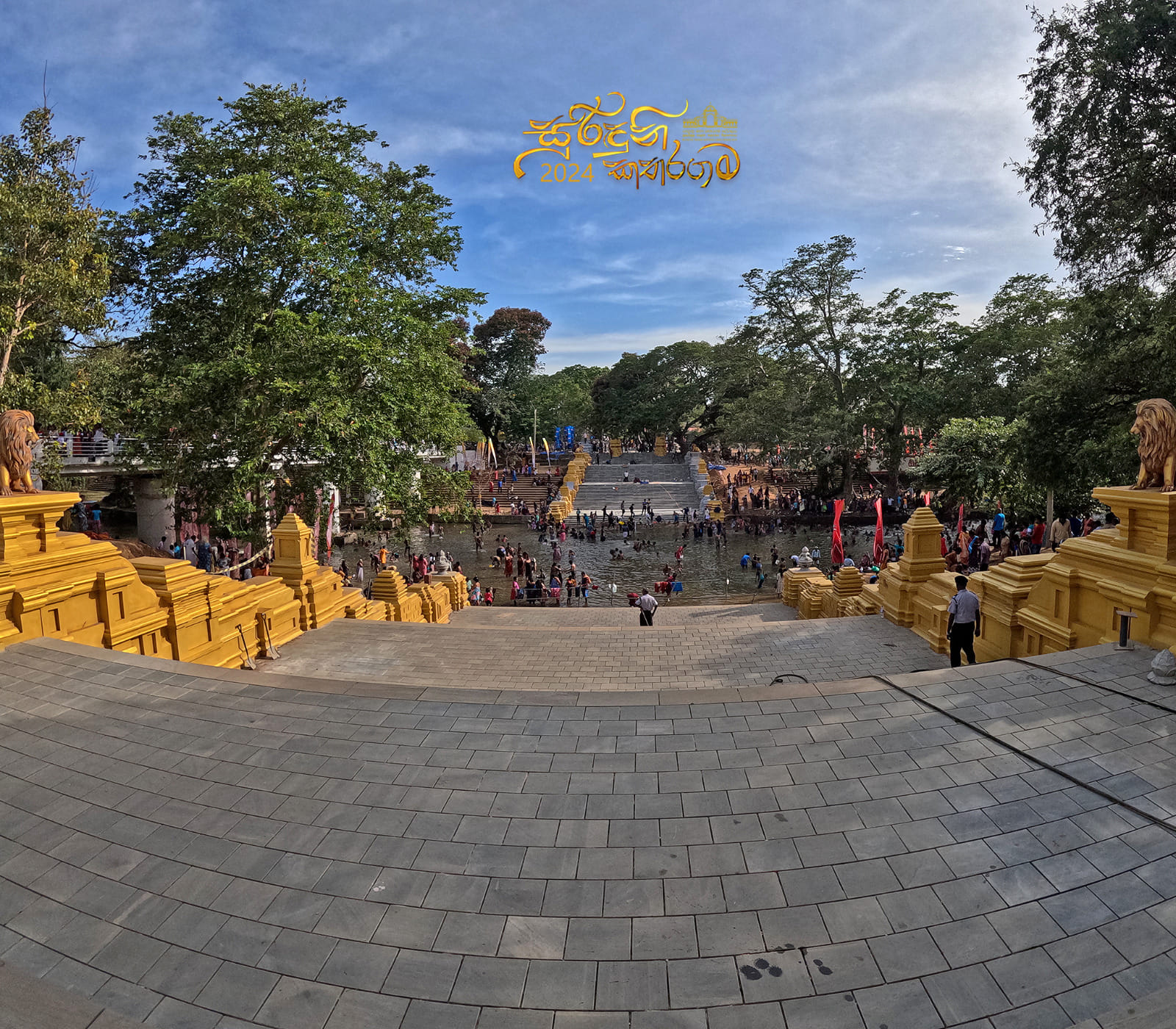
The Gem River — where centuries of pilgrims have waded into golden waters to purify body and spirit before entering the sacred shrines of Kataragama.
The Menik Ganga — meaning "Gem River" — is named for the precious stones (garnets, zircons, and sapphires) that have historically been found in its sands. Originating in the Uva Province highlands, it flows south through Yala National Park before meeting the Indian Ocean near Hambantota.
At Kataragama, the river forms a natural boundary adjacent to the sacred complex. Before entering any of the shrines, Hindu and Buddhist pilgrims alike wade into the gentle current to perform ritual purification — washing away worldly concerns to approach the divine with a clean spirit.
Pilgrims immerse themselves three times, facing upstream toward the rising sun. Priests often stand at the riverbank offering sacred ash (vibhuti) or turmeric to those emerging from the water — a blessing to mark the transition from the ordinary to the sacred realm.
Uniquely, the Menik Ganga purification is practiced by Hindus, Buddhists, and followers of the indigenous Vedda tradition — making it one of Sri Lanka's most truly interfaith sacred sites, where different traditions share a single sacred act.
Access Hours
Open 24 hours — pilgrims bathe at all hours
Entry Fee
Free access always
Location
Adjacent to the Kataragama sacred complex, a short walk from the main devale
Bathing Etiquette
Modest swimwear/sarong required. No motor vehicles near the bathing area. Respect those in prayer.
Early Morning (6–8 AM)
Dawn is transformative — mist rising from the water, birdsong, and the gentle sound of prayers as the first pilgrims begin their purification ritual.
Late Afternoon (4–6 PM)
The golden hour light catches the water beautifully. Cooler temperatures make this ideal for walking the riverbanks.
Festival Season (Jul–Aug)
During the Esala Perahera, witness the Diya Kapeema water-cutting ceremony and the greatest gathering of pilgrims at the river.
Bring a change of clothes and a towel if you plan to bathe
The current can be strong after heavy rainfall — check conditions
Apply sunscreen before heading to the riverbank; shade is limited midday
Photography of bathing pilgrims requires their consent — be respectful
Small offerings (flowers, coconut) are available from vendors nearby
Include the Menik Ganga ritual bath as the first act of your Kataragama pilgrimage, then proceed through the sacred complex fully purified.
Plan NowFrom the river, journey deeper into the sacred complex of Kataragama
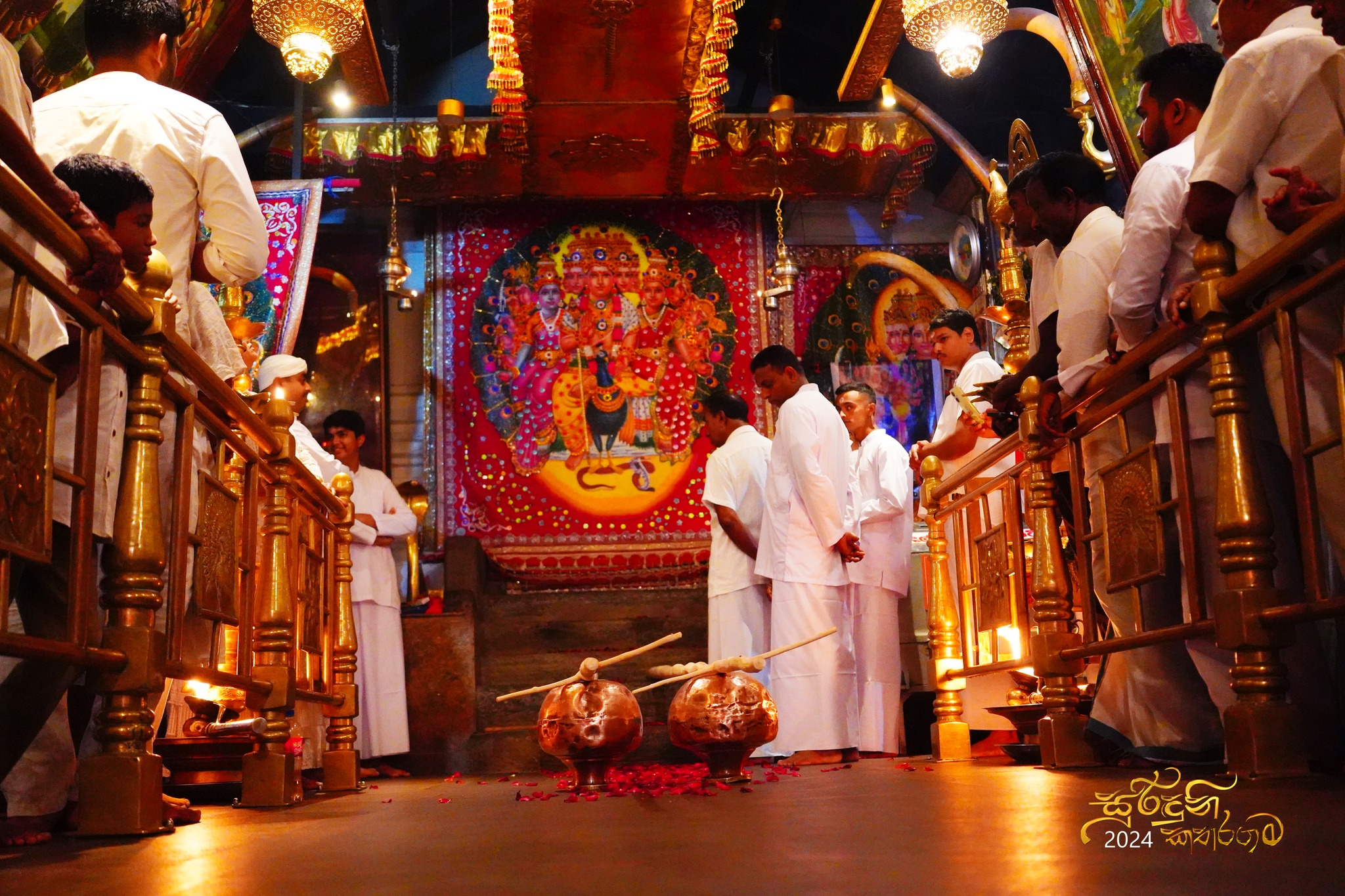 Main Temple
After your purification bath, enter the Ruhunu Maha Kataragama Devale — the sacred heart of this ancient pilgrimage city.
Learn More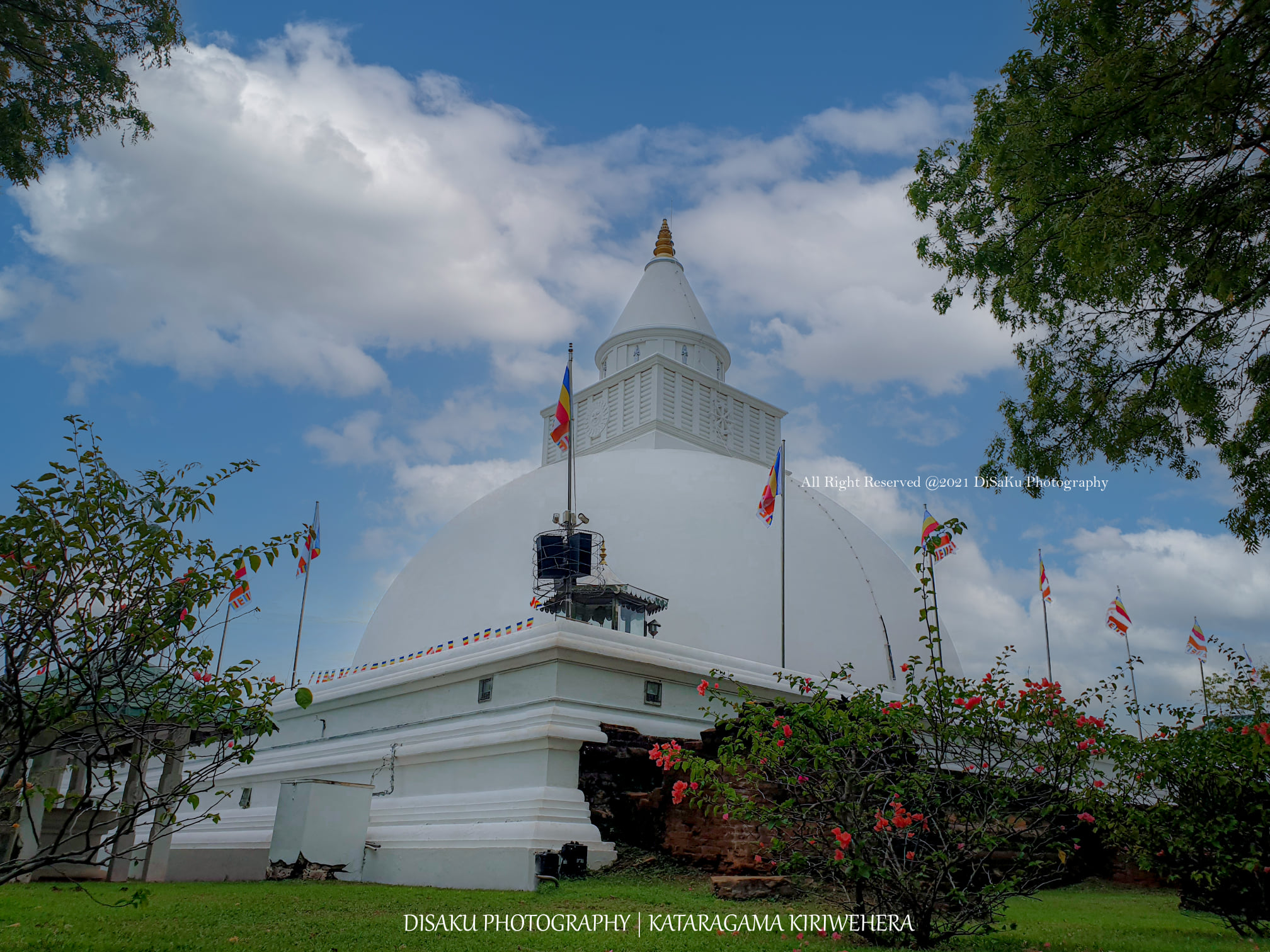 Buddhist Stupa
The pristine white Milk Stupa stands 29 metres tall — a beacon of Buddhist devotion built in the 3rd century AD.
Learn More Sacred Site
The outer sacred village 4km from the main complex — intimate pujas, the Ganesha shrine, and Valli Amma's legendary cave.
Learn MoreWade into the Menik Ganga at dawn, let the ancient current wash over you, and emerge ready to face the divine mysteries of Kataragama.